National Anthem Comparison
Republic of the Congo vs Cameroon
Comparison Analysis
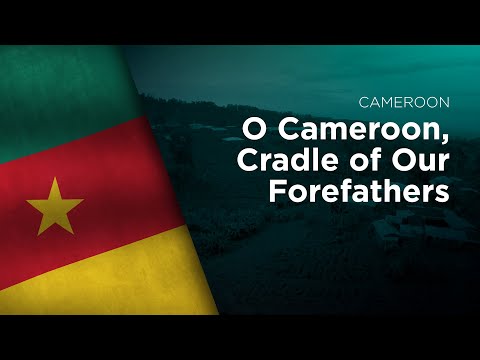
Republic of the Congo and Cameroon, both Africa nations, take distinct approaches to their national anthems. Republic of the Congo's "The Congolese" was written in 1959, while Cameroon's "O Cameroon, Cradle of Our Ancestors" dates to 1928.
Both anthems share themes of unity and freedom. Republic of the Congo additionally explores nature and hope, while Cameroon also touches on ancestors / heritage and love of homeland.
Both anthems carry a proud tone, creating a similar emotional register despite their geographic distance.
Cameroon's anthem predates Republic of the Congo's by 31 years, having been written in 1928 compared to 1959.
Republic of the Congo changed its national anthem in 1991, reflecting a shift in the nation's identity or political landscape.
Shared themes
Republic of the Congo
Cameroon
Shared themes:
Metadata
| Republic of the Congo | Cameroon | |
|---|---|---|
| Written | 1959 | 1928 |
| Adopted | 1959 | 1957 |
| Lyricist | Jacques Tondra / Georges Kibanghi | René Djam Afame, Samuel Minkio Bamba, Moïse Nyatte Nko'o (1928); revised 1970 |
| Composer | Jean Royer / Joseph Spadiliere | René Djam Afame (disputed; also credited to Samuel Minkio Bamba) |
| Language | fr | fr |
| Region | Central Africa | Central Africa |
Lyrics Side by Side
Republic of the Congo
La Congolaise
Original
Translation
Cameroon
Ô Cameroun, berceau de nos ancêtres
Original
Translation
Interesting facts
Republic of the Congo
- 1. The replacement anthem 'Les Trois Glorieuses' (The Three Glorious Days) was named after the uprising of 13 to 15 August 1963 that overthrew the first president, Fulbert Youlou. Its words were written by Henri Lopes, the writer who later served as prime minister from 1973 to 1975.
- 2. La Congolaise was written before independence: the words by Jacques Tondra, a Frenchman, and Georges Kibanghi, a Congolese, and the music by Jean Royer and Joseph Spadilière.
- 3. La Congolaise beat a rival song, 'Allons Congo' by the Europeans Jo Noves and Stéphane May, by 44 votes to 9 in the National Assembly, and was adopted by constitutional law no. 10 of 21 November 1959.
- 4. Its refrain sets the national motto to music: 'Vivons pour notre devise: Unité, travail, progrès!' (Let us live for our motto: Unity, work, progress!).
- 5. Brazzaville, the capital, faces Kinshasa (DR Congo's capital) across the Congo River; apart from Rome and Vatican City, they are the closest pair of national capitals in the world.
Cameroon
- 1. The words began as a civics assignment in which the students were asked to express their hopes for Cameroon's future; according to one historical account, Afame then combined the best sentences into the two stanzas of the original text.
- 2. Sources differ on the composer: the Cameroonian embassy in Brussels credits Afame, while the same historical account says three student musicians each wrote a melody and Samuel Minkio Bamba's was chosen.
- 3. The song dates from 1928, almost three decades before it became the official anthem in 1957.
- 4. The text was revised in 1970, and Cameroon has official versions of the anthem in both French and English, its two official languages.
Listen
Republic of the Congo

Cameroon