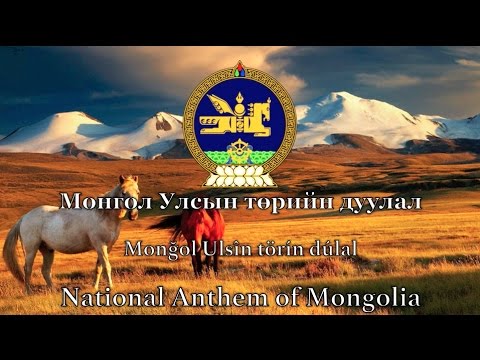
National Anthem Comparison
China vs Mongolia
2
Shared themes
✗
Different moods
15
15 years apart
✓
Same continent
Comparison Analysis
China and Mongolia, both Asia nations, take distinct approaches to their national anthems. China's "March of the Volunteers" was written in 1935, while Mongolia's "National Anthem of Mongolia" dates to 1950.
Both anthems share themes of unity and resilience. China additionally explores battle / war, while Mongolia also touches on ancestors / heritage and independence.
The emotional tones differ: China's anthem is fierce, while Mongolia's is proud.
Mongolia changed its national anthem in 2006, reflecting a shift in the nation's identity or political landscape.
Shared themes
China
⚔ Battle / War 🤝 Unity 💪 Resilience
Mongolia
🏺 Ancestors / Heritage 🗽 Independence 🤝 Unity 💪 Resilience
Shared themes:
🤝 Unity 💪 Resilience
Metadata
| China | Mongolia | |
|---|---|---|
| Written | 1935 | 1950 |
| Adopted | 1949 | 2006 |
| Lyricist | Tian Han | Tsendiin Damdinsuren |
| Composer | Nie Er | Bilegiin Damdinsuren, Luvsanjambyn Mördorj |
| Language | zh | mn |
| Region | East Asia | East Asia |
Lyrics Side by Side
China
义勇军进行曲
Original
起来!不愿做奴隶的人们!
把我们的血肉,筑成我们新的长城!
中华民族到了最危险的时候,
每个人被迫着发出最后的吼声。
起来!起来!起来!
我们万众一心,
冒着敌人的炮火,前进!
冒着敌人的炮火,前进!
前进!前进!进!
Translation
Arise, ye who refuse to be slaves!
With our very flesh and blood let us build our new Great Wall!
The Chinese nation has reached its most dangerous hour,
Everyone is forced to let out a final roar.
Arise! Arise! Arise!
Millions of hearts with one mind,
Brave the enemy's gunfire, march on!
Brave the enemy's gunfire, march on!
March on! March on! On!
Mongolia
Монгол улсын төрийн дуулал
Original
Дархан манай тусгаар улс
Даяар монголын ариун голомт
Далай их дээдсийн гэгээн үйлс
Дандаа энхжиж, үүрд мөнхөжнө.
Хамаг дэлхийн шударга улстай
Хамтран нэгдсэн эвээ бэхжүүлж
Хатан зориг, бүхий л чадлаараа
Хайртай Монгол орноо мандуулъя.
Өндөр төрийн минь сүлд ивээж
Өргөн түмний минь заяа түшиж
Үндэс язгуур, хэл соёлоо
Үрийн үрдээ өвлөн бадраая.
Эрэлхэг Монголын золтой ардууд
Эрх чөлөө жаргалыг эдлэв
Жаргалын түлхүүр, хөгжлийн тулгуур
Жавхлант манай орон мандтугай.
Translation
Our sacred independent state,
The holy hearth of all Mongols,
The radiant deeds of our great ancestors
Shall ever flourish in peace and endure for all time.
With all the just nations of the world
Let us strengthen the concord that unites us,
And with firm resolve and all our strength
Let us make our beloved Mongolia flourish.
With the emblem of our exalted state to bless us,
With the destiny of our vast people to sustain us,
Our roots and origins, our language and culture
Let us hand down to our children's children and make them thrive.
The fortunate people of heroic Mongolia
Have come to enjoy freedom and happiness.
Key to happiness, pillar of progress,
May our magnificent country prosper.
Interesting facts
China
- 1. Lyricist Tian Han (1898 to 1968) was arrested by the Nationalist government in February 1935, just after finishing the lyrics for the film, so Nie Er set them to music while Tian was in prison; during the Cultural Revolution he was imprisoned again and died in custody in Beijing in 1968.
- 2. Composer Nie Er (1912 to 1935) drowned while swimming off Fujisawa, Japan, in July 1935, at the age of 23, only months after writing the music; he had left China that April, intending to travel on to study in the Soviet Union.
- 3. When the song was chosen in 1949, some objected to keeping its line that the Chinese nation faces its 'most dangerous time', since it suggested the country was still in peril; Zhou Enlai replied that China still faced imperialist enemies, and the line stayed.
- 4. African American singer Paul Robeson recorded the song in 1941 as 'Chee Lai!' (起来 'Arise'), in Mandarin and English, with Chinese musician and activist Liu Liangmo, helping to spread the melody worldwide during the Second World War.
- 5. Under the National Anthem Law of 2017, the anthem may not be used in trademarks or commercial advertising or as background music in public places; deliberately altering its lyrics or score in public, or performing it in a distorted or disparaging way, can bring a police warning or up to 15 days' detention, and serious cases are a crime under Article 299 of the Criminal Law.
Mongolia
- 1. The 2006 revision added a second verse that pledges to hand down the nation's roots, language and culture to future generations; each of the two verses now has its own refrain
- 2. The melody, composed by Bilegiin Damdinsuren and Luvsanjambyn Mördorj in 1950, has outlasted every change of lyrics
- 3. Stalin's name may be one reason the 1950 lyrics were replaced in 1961: after his death in 1953, the verse that mentioned him is reported to have gone unsung
- 4. One reason given for abandoning the 1961 words is that they never fitted the melody well
Listen
China

Mongolia