National Anthem Comparison
Croatia vs Serbia
Comparison Analysis
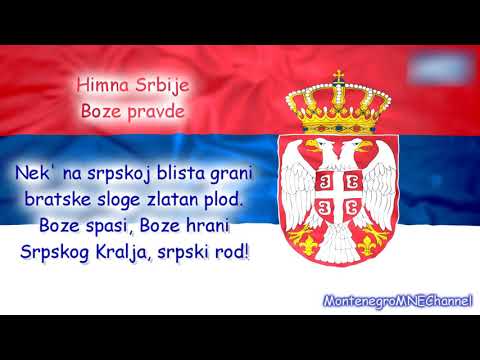
Croatia and Serbia, both Europe nations, take distinct approaches to their national anthems. Croatia's "Our Beautiful Homeland" was written in 1835, while Serbia's "God of Justice" dates to 1872.
Both anthems share themes of identity. Croatia additionally explores nature, love of homeland and ancestors / heritage, while Serbia also touches on god / faith, freedom, unity and resilience.
The emotional tones differ: Croatia's anthem is proud, while Serbia's is prayerful.
Croatia's anthem predates Serbia's by 37 years, having been written in 1835 compared to 1872.
Serbia changed its national anthem in 2006, reflecting a shift in the nation's identity or political landscape.
Shared themes
Croatia
Serbia
Shared themes:
Metadata
| Croatia | Serbia | |
|---|---|---|
| Written | 1835 | 1872 |
| Adopted | 1972 | 2006 |
| Lyricist | Antun Mihanović | Jovan Đorđević |
| Composer | Josip Runjanin | Davorin Jenko |
| Language | hr | sr |
| Region | Southern Europe | Southern Europe |
Lyrics Side by Side
Croatia
Lijepa naša domovino
Original
Translation
Serbia
Боже правде
Original
Translation
Interesting facts
Croatia
- 1. The words first appeared on 14 March 1835 in the literary paper Danica, as "Horvatska domovina" ("Croatian Homeland"), during the Croatian National Revival
- 2. The melody has often been compared with the duet of Edgardo and Enrico in Act 3 of Donizetti's opera Lucia di Lammermoor (1835); whether Runjanin borrowed from it is still debated
- 3. The official anthem uses adapted versions of the first two and the last two stanzas of Mihanović's poem
- 4. In 1907 the Association of Croatian Singing Societies asked the Croatian Sabor to make the song the state anthem by law; the initiative failed, and it remained Croatia's unofficial anthem until 1972
Serbia
- 1. The anthem is written as a prayer, opening with an appeal to the 'God of justice'.
- 2. It was first performed in 1872 in Đorđević's play Markova sablja, set to music by Davorin Jenko, a Slovene composer then working in Belgrade.
- 3. The official text replaces the royalist lines of the version sung after Serbia became a kingdom in 1882 (the 1872 original hailed a prince): 'the Serbian king' became 'the Serbian lands', 'the Serbian crown' became 'Serbian glory', and 'the Serbian Kingdom' became 'the Serbian fatherland'.
- 4. It has been used again since 2004, was named the national anthem in the 2006 Constitution and was confirmed by an act of the National Assembly in 2009.
Listen
Croatia

Serbia