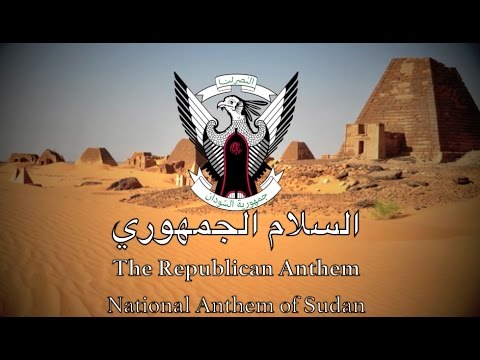
Sudan
نحن جند الله جند الوطن
Nahnu Jund Allah Jund al-Watan
We Are Soldiers of God, Soldiers of the Homeland
Key Facts
- 1. The statutory anthem is just a single eight-line stanza, the version Sudanese embassies in Cairo and The Hague publish; longer wartime variants in circulation are not officially approved.
- 2. Ahmed Muhammad Salih wrote the lyrics in 1955, a year before independence, and Colonel Ahmed Morjan composed the music the same year.
- 3. Sudan kept the anthem unchanged after South Sudan seceded in 2011, when the new state adopted its own song, 'South Sudan Oyee!'.
- 4. The opening line names the singer as a soldier of God and a soldier of the homeland in the same breath, fusing religious and civic duty more tightly than almost any other Arab anthem.
Lyrics
Translations are non-official and intended to convey meaning, not replace originals
Analysis
EditorialSudan adopted the anthem on independence day, 1 January 1956, as the Anglo-Egyptian Condominium dissolved. The poet Ahmed Muhammad Salih wrote the words a year earlier, and Colonel Ahmed Morjan set them to music in the same season. The official text is brief by anthem standards: a single eight-line stanza, the version Sudanese embassies in Cairo and The Hague publish on their letterhead. Longer wartime variants beginning 'We are the lions of the jungle, the sons of wars' have circulated for decades, but none of them is statutory. When South Sudan seceded in 2011, Khartoum kept the song unchanged.
Learn More
Sources & References
- النشيد الوطني (National Anthem) — Sudan country page . Embassy of the Republic of the Sudan in Cairo (2024)
- Embassy of the Republic of the Sudan — official site . Embassy of the Republic of the Sudan in The Hague (2024)
Source & Review
- Source status
- Embassy or ministry verified
- Translation
- Nationalia working translation
- Rights status
- Third-party rights may apply
- Last reviewed
- Editorial review
- AI-assisted editorial review
- Editorial owner
- Nationalia
- Report a correction
- rights@nationalia.org